The European Central Bank (ECB) is the central bank of the eurozone, the twenty European Union member states that share the euro. It is the only institution with the right to authorise the issuance of euro banknotes.
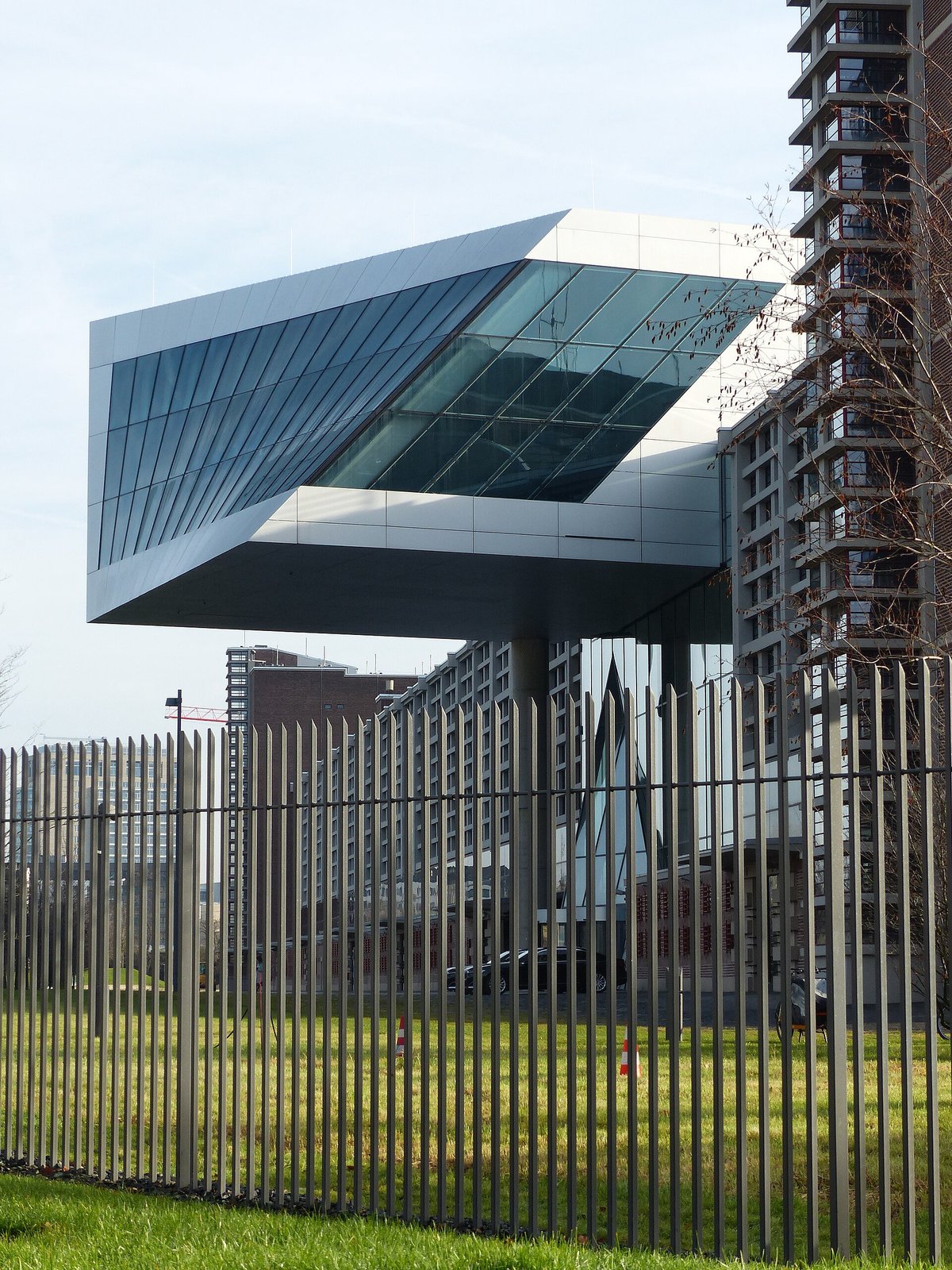
Photo: Warburg1866, CC BY-SA 4.0, via Wikimedia Commons.
Founding (1998)
The ECB was established on 1 June 1998, succeeding the European Monetary Institute that had prepared the legal and operational framework for monetary union since 1994. Its first president, the Dutch economist Wim Duisenberg, oversaw the introduction of euro banknotes and coins on 1 January 2002.
The Frankfurt headquarters
The ECB sits in Frankfurt am Main. Its current headquarters, completed in 2014 and inaugurated on 18 March 2015, is a 185-metre twisted double tower by the Vienna firm Coop Himmelb(l)au. The tower was three years late and €350 million over its initial budget.
The building stands on the site of the old Großmarkthalle, the wholesale fruit and vegetable hall designed by Martin Elsaesser and opened in 1928, one of the largest interwar reinforced-concrete structures in Germany. Rather than demolish it, Coop Himmelb(l)au wove it into the new building as the ECB's "urban foyer", with the visitor centre, library, conference rooms and staff cafeteria installed as freestanding pavilions inside the preserved hall.
Mandate and Governing Council
The Governing Council, made up of the ECB Executive Board and the governors of the twenty eurozone national central banks, meets every six weeks to set interest rates. The bank's primary mandate, fixed in the Maastricht Treaty, is to maintain price stability across the eurozone, interpreted in practice as keeping inflation around two per cent over the medium term.
The ECB's capital is held by all twenty-seven EU national central banks in proportion to population and GDP. The Bundesbank holds the largest share at around twenty-one per cent.
Presidents
Wim Duisenberg (1998–2003) was followed by the French civil servant Jean-Claude Trichet, who steered the bank through the 2008 financial crisis. Mario Draghi (2011–2019) became known for his "whatever it takes" pledge at a London conference on 26 July 2012, in which he said the ECB would do whatever was necessary to preserve the euro; the sovereign-debt crisis eased almost immediately. Christine Lagarde, the former French finance minister and managing director of the IMF, took office on 1 November 2019.